A One-Person Void Distro That Ships Its Own Kernel and Publishes the Receipts
Every distro asks you to trust someone. The ISO is a black box signed by a key you never checked, built on infrastructure you cannot see, by people whose process is a wiki page and a mailing list thread. You trust Fedora because Red Hat exists. You trust Debian because ten thousand people would scream. Trust by reputation, trust by scale — that is the entire security model of desktop Linux, and after the AUR compromise and the xz backdoor, everyone pretending otherwise is not paying attention.
Odyssey Linux is a Void-based, systemd-free, rolling distribution built by one pseudonymous developer who signs every artifact "nobody" and prints the same sentence everywhere: Don't trust me. Verify me. It is not asking for trust by reputation. It publishes the build recipes, signs every package twice, logs every signature to a public transparency log, ships a tool that checks any package on your machine, and tells you plainly that verification proves what was checked and nothing more.
That claim is testable. So this article tests it.
What Odyssey Actually Is
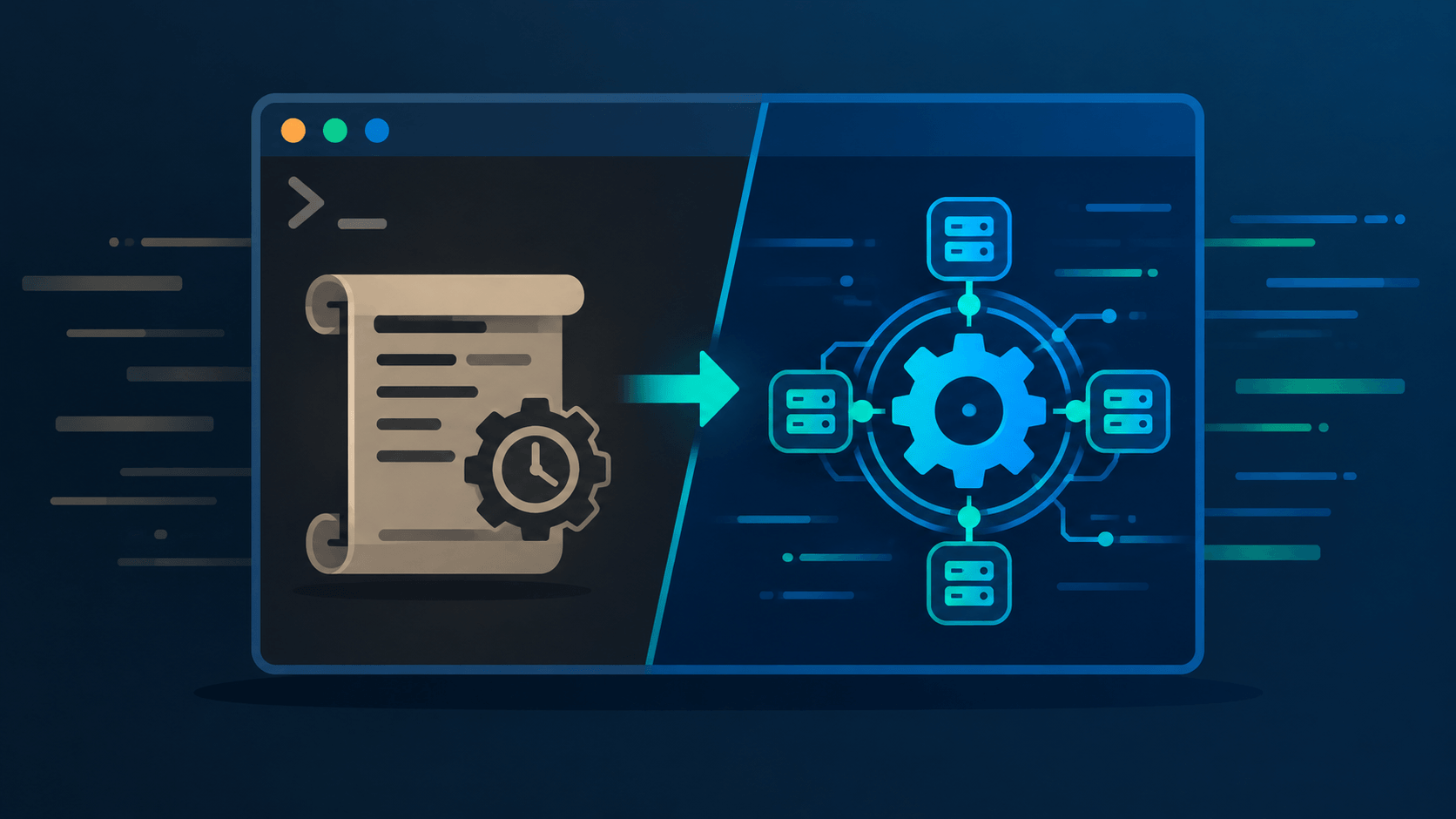
Strip away the security theater — and Odyssey is remarkably narrow about what it adds. At its core it is Void Linux: XBPS packages, runit as PID 1, no systemd anywhere. What Odyssey layers on top is an optimized kernel, a graphical installer, a suite of native graphical tools, and its own supplementary package repository. Everything else — the userland, the vast majority of packages — comes from Void's own repositories, built the way Void builds them.
This is a deliberate design choice with a philosophical aim. The project describes its goal as making the world of systemd-free distributions — Void, Gentoo, Slackware territory — more accessible without diluting their philosophy: understandable tools, freedom of choice, control over your own system. Think of it as "Void with the setup work already done and the documentation printed next to the button."
A few things worth knowing up front:
- It is rolling. Install once, update continuously through
xbps-install -Su. The weekly "chapter" ISOs are just refreshed installation media, not separate releases. - It is young. Development started roughly 14 months before the August 2026 Launch Edition. The current release is the 2027 Edition ("Reise", Beta III) as of November 2026.
- It is x86-64-v3 only. More on this below — it is the single biggest hardware compatibility decision the project makes.
- It is one person. The developer goes by "nobody," signs the documentation with it, and runs the whole thing — code, build infrastructure, hosting — without sponsors and without GitHub.
Approachable Without Hiding Anything
The traditional entry cost of Void is not the install — it is everything after: runit service symlinks by hand, xbps grammar you have to look up, hardening that lives in a wiki page you find three weeks too late. Odyssey attacks exactly that friction.
Installation runs through Calamares (3.3.14 in the Launch Edition, patched for runit), with a desktop chooser and full-disk encryption offered at install time. The 2027 Edition includes encrypted installation as a headline feature. Six sessions ship: KDE Plasma, Xfce, niri, Hyprland, Mango, and labwc, with the Noctalia shell (built on Quickshell) on the tiling setups.
The Odyssey Control Center is the flagship tool: ten independent panels behind one launcher — Boot, Kernel, Memory & Swap, Firewall, AppArmor, Privacy, Containers, Gaming Mode, Telemetry, About — plus a beta NVIDIA module that detects the GPU against a built-in database and drives driver installation through a tracked, revertible process. The design rule the project states is worth repeating, because it's the right rule: every graphical tool is a thin front-end over the real Linux mechanism underneath. The panels read GRUB's own config, the kernel's own sysctl interface, nftables, Podman. No panel keeps private state. Everything the GUI does can be done by hand from a terminal, and the documentation prints the exact command next to the button.
Software management gets both a native Qt 6 front-end for XBPS (xbps-gui, no Electron) and small command wrappers with actual grammar: oadd, oremove, oupdate, oinfo, with parallel downloads via aria2. Service management gets guinit, which handles runit enable/disable without anyone memorizing ln -s /etc/sv/SERVICE /var/service/.
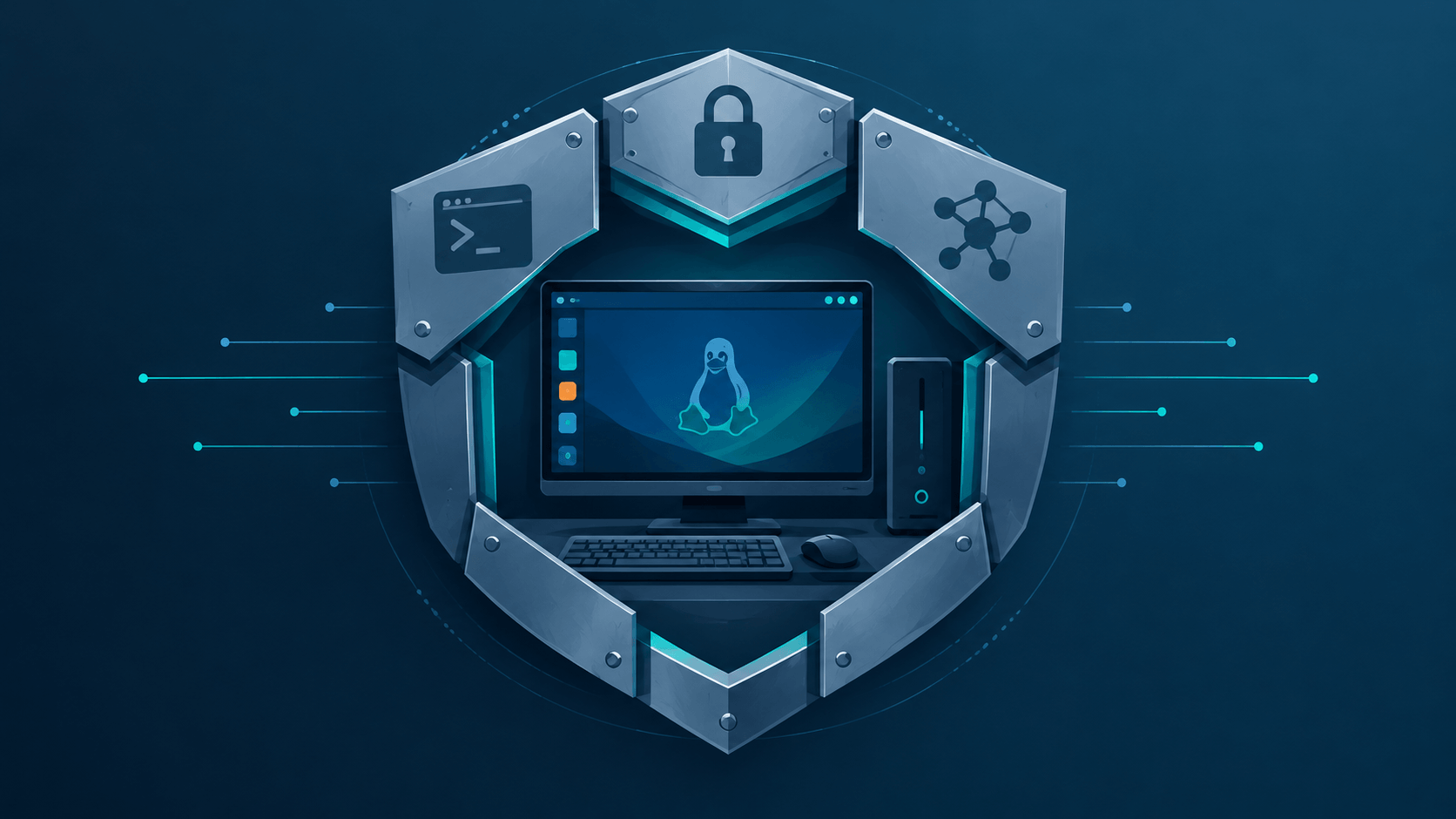
Security is on from the first boot, which is the Kicksecure-style move: nftables firewall with a drop-by-default ruleset (no open ports answering), AppArmor loaded at boot via kernel parameters, hardened toolchain, restrictive sysctl, KSPP-oriented kernel hardening config. AppArmor profiles start in complain mode — logged, not blocked — and the user escalates them deliberately. The Telemetry panel deserves special mention: it sends nothing anywhere. It is a live monitor of your own outbound connections, so the "telemetry setting" is an inspection tool, not a switch you hope is off. There is also an optional hardened LibreWolf setup that runs the browser profile in RAM (/dev/shm), and a Privacy panel with guided setup for a local SearXNG instance bridged to Tor.
The project's own one-liner: ready to use out of the box, without hiding anything in exchange.
linux-odyssey: The Kernel It Ships (and the Catch)
The one piece of the system Odyssey compiles itself for its target architecture is the kernel: linux-odyssey, a normal XBPS package that updates like any other. In the Launch Edition it was 6.12.96_1, carrying the BORE scheduler, BBR3, HZ_1000, PREEMPT, THP, zswap, kyber, and zstd patches, selected CachyOS performance patches, and an x86-64-v3 baseline.
The catch is that last item. x86-64-v3 means roughly Intel Haswell (2013) or AMD Excavator/Zen (2015) and newer. Older CPUs will not run this distribution at all — not "slower," not "unsupported," but incompatible instructions. For a project that wants to make an old-school distro philosophy more accessible, this is a real narrowing of the door: hardware that would run Void or Debian perfectly well is excluded by default. The performance case is genuine — x86-64-v3 unlocks AVX2 and friends, and BORE is a well-regarded latency-oriented scheduler — but know that it is a trade, made deliberately.
The measured RAM numbers from the project are refreshingly concrete (idle on a ThinkPad with AMD graphics):
| Session | Idle RAM |
|---|---|
| labwc | ~570 MB |
| Xfce | ~570 MB |
| KDE Plasma (Wayland) | ~645 MB |
| Mango, niri, Hyprland (with Noctalia) | ~1.1 GB |
The honest surprise the project itself flags: the tiling sessions cost more at idle than KDE Plasma, and the culprit is not the window manager — it is Noctalia's Qt 6/QML runtime (Quickshell), worth roughly 500 MB. Minimum practical RAM is 2 GB for labwc or Xfce; 4 GB is recommended for anything else.
The Trust Model: Where It Gets Interesting
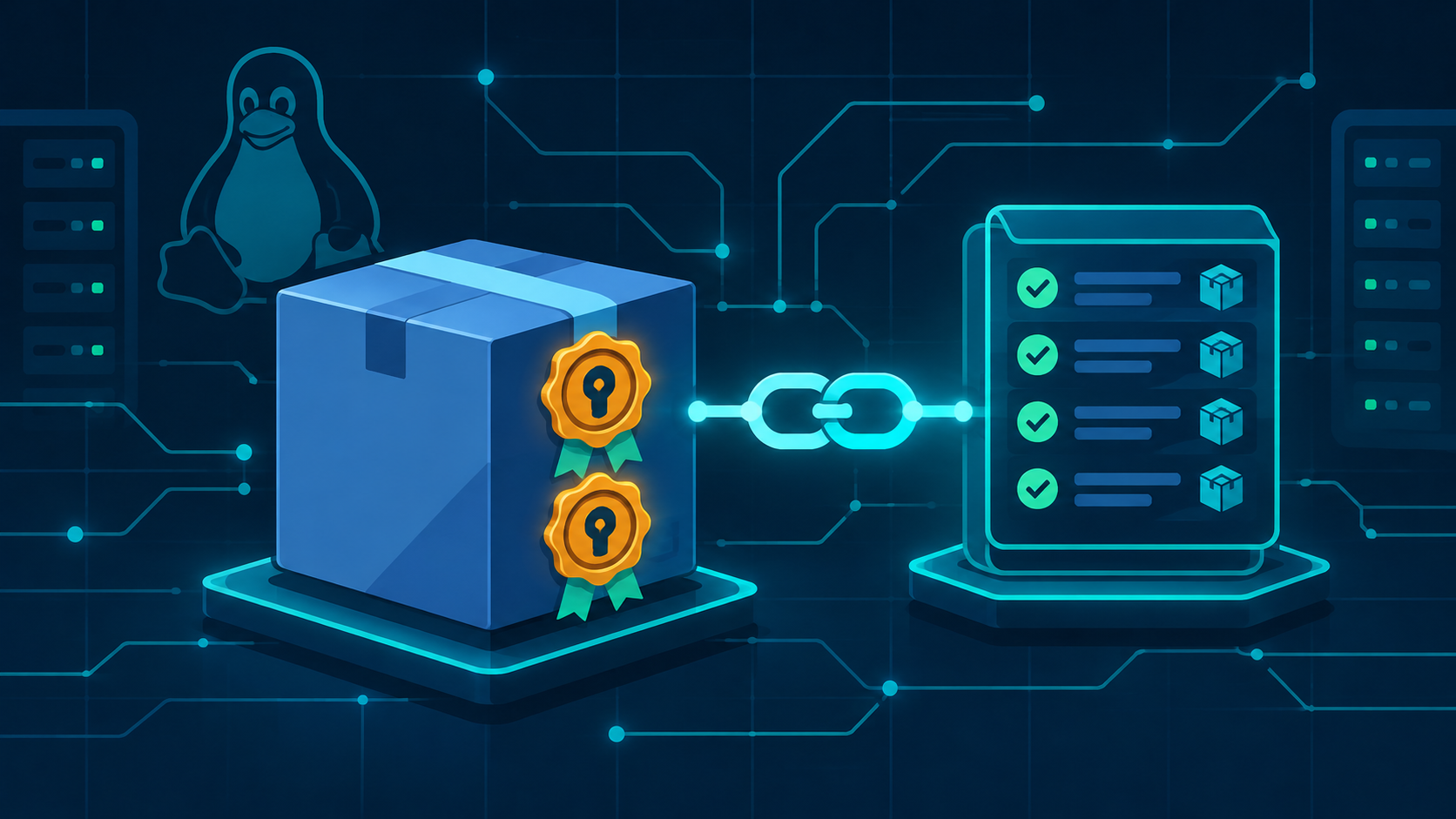
Here is the pipeline the project publishes for every package in its own repository: pinned upstream checksum → reproducible build → double signature (XBPS .sig2 RSA 4096 plus a cosign ECDSA signature recorded in Sigstore's Rekor transparency log) → public recipe at the exact commit. Every package is malware-scanned before signing, listed in a signed manifest (odyssey-challenge.json), and re-verified every few hours by a monitor that runs outside the repository server. The current claim is 2,000 reproducible packages with public build recipes.
Verification is meant to be a one-liner from the user's own machine:
# in a terminal on the Odyssey machine
$ odyssey-challenge verify PACKAGE
# or check a version straight from the repository
$ xbps-query -R -p pkgver PACKAGE
or, the long way with cosign directly:
# in a terminal on the Odyssey machine
$ cosign verify-blob --key cosign.pub --bundle PACKAGE.xbps.cosign.bundle PACKAGE.xbps
Verified OK
The detail that separates the people who did this seriously from the people who cosplay it: the verification key is published in a separate repository from the packages. The project's own instruction is to take cosign.pub from the keys repository (code.odysseylinux.org/nobody/odyssey-keys), not from the package server — because compromising one would then have to defeat the other. Rekor logging means every signature is publicly timestamped in an append-only log, so a signature cannot quietly be swapped after the fact without leaving evidence.
The staging system ("Shipwreck") has the same discipline: its own repositories, signed build environments, public recipes, and — the part most projects get wrong — promotion into the main repository copies the tested binary and its existing signatures rather than recompiling it. What was tested is what ships.
And credit where it's due: the project quotes its own limits. The security page states the principle flatly — a signature says who built a package, not that it was built honestly — and the docs add that a successful check only establishes what was checked; it doesn't make every application or package harmless. That's about as honest as a distro's security page gets.
So what does verification actually buy you? Three things, precisely: (1) the package you installed is byte-identical to what the build pipeline published, (2) the recipe behind it is public and pinned, so an independent rebuild can in principle reproduce it, and (3) the signature timeline is externally logged, so retroactive tampering is detectable. What it does not buy you: a guarantee that the recipe itself is sane, that the upstream source is clean, or that "nobody" reviewed the code before signing. The AUR-compromise threat model — malicious package pushed through the normal pipeline — is addressed by scanning, recipes, and independent rebuilds. The malicious-maintainer threat model is addressed only by transparency, not eliminated. The project says as much.
Honesty as a Feature
The Launch Edition documentation contains what may be the most candid release note you'll read this year. The project calls its system "stable, with a lowercase s": it installs, boots, and runs with no known serious bugs, but its exposure surface is small — few machines, few hardware combinations, few months of real-world use. It then names the circular problem outright: a distribution never becomes stable without a user base large enough to test it, and nobody tests a distribution that calls itself unstable. Rather than pick a word and hope, it asks users to report everything, with the 2027 Edition positioned as the target for stable with a capital S.
That framing matters when you weigh the project. It is not a fly-by-night respin: 14 months of work, self-hosted Forgejo with 64+ repositories of sources, recipes, and build tooling, published PDFs (a Control Center guide, a security guide, the Launch Edition release document, CC BY-SA 4.0), a public bug tracker, and a weekly security bulletin published every Wednesday. But it is also not Debian. Its funding model is equally blunt about this: the "Argonauts" program asks for fixed monthly contributions rather than donations, accepts no sponsorships, and refuses GitHub and SourceForge for hosting — independence that keeps control with the community but concentrates operational load on one person.
The Hard Questions
A skeptical article has to ask what the marketing does not.
One pseudonymous developer is the bus factor. Not a team, not a foundation — one person, known only as "nobody," building the kernel, the tools, the infrastructure, and the documentation. If they vanish tomorrow, the recipes and repos survive (they are public and self-hosted), but momentum, signing keys, and institutional memory do not. This is the single largest risk in the project, and no amount of supply-chain rigor changes it.
Self-hosting cuts both ways. No GitHub means no external audit of the forge itself, and code.odysseylinux.org is a single operator's infrastructure. The keys/packages split mitigates the package-server risk specifically, which shows the developer thinks about exactly this — but the mitigation is still hosted by the same party.
The theme will be divisive. The one substantive negative review to date (Homo Ludditus, August 2026) rejected Odyssey outright — not because it broke, it "just worked," but because the theming offended the reviewer: split window controls, mixed KDE and Xfce applications on the same desktop, spacing quirks in xbps-gui and guinit. Commenters pushed back that judging a distro by its theme is not a review. Both are right: default aesthetics are a legitimate daily-use factor, and they say nothing about the engineering. Decide for yourself which kind of reader you are.
Complain mode is a starting point, not a guarantee. AppArmor profiles log rather than block until the user tightens them. That is the right default for usability, but a user who never escalates gets detection, not protection.
The verdict from testers is "it works." LinuxLinks (July 2026) called it an approachable Void-based distribution and listed its feature set approvingly. The skeptical reviewer's quick test found nothing broken. Small sample, early days — the same lowercase-s caveat applies.
Who Should Run This (and Who Should Not)
Run Odyssey if you want systemd-free Linux without the Void onboarding cliff; you want security defaults enabled on day one instead of on a wiki page; you believe supply-chain verification should be a user-facing feature, and you'll actually use odyssey-challenge; you have x86-64-v3 hardware and want a tuned kernel out of the box; you like your distro's documentation to tell you what it does not protect you from.
Skip Odyssey if you need pre-2013 hardware to work; you want distribution-scale maturity and a decade of bug history; you want a design language chosen by a committee rather than one strong opinion; you cannot accept a single anonymous maintainer as the trust root; or you want AppArmor simply gone — like one reviewer, you may find enforced hardening philosophically offensive, and Odyssey's stance is that security defaults stay on.
Living With It: The Commands You Will Actually Use
The docs publish the commands people look for most. Here they are:
# flashing the ISO to a USB stick (replace sdX with your actual device)
sudo dd if=odyssey.iso of=/dev/sdX bs=4M status=progress oflag=sync

# updating everything
sudo xbps-install -Su

# installing / removing a package (with its orphans)
sudo xbps-install PACKAGE
sudo xbps-remove -R PACKAGE

# searching the repositories
xbps-query -Rs KEYWORD

# services, runit-style
sv status /var/service/*
sudo ln -s /etc/sv/SERVICE /var/service/   # enable at boot
sudo sv down SERVICE                       # stop
sudo sv up SERVICE                         # start

# the kernel updates like any other package
sudo xbps-install -Su linux-odyssey

# verifying a package before you trust it
cosign verify-blob --key cosign.pub --bundle PACKAGE.xbps.cosign.bundle PACKAGE.xbps
One installation note from the project worth repeating: test it on real hardware. The Wayland compositors (Mango, niri, Hyprland) depend on the GPU and driver stack, and a VM gives them neither — the project's own analogy is judging a Ferrari in city traffic. The current ISO's sha256 is published on the download page; check it against that page before you dd, rather than trusting any hash reprinted elsewhere, including this article.
The Verdict
Odyssey Linux is the rare project whose central claim is not "we are secure" but "here is how you check." On the engineering, the claim mostly holds: dual signatures with public recipes and pinned checksums, a transparency log, verification tooling built for ordinary users rather than the Reproducible Builds crowd, keys published apart from packages, tested binaries shipped unchanged, and documentation that volunteers its own limitations. That is a better trust model than most distributions — including ones a hundred times its size — offer today.
What verification cannot do is erase the human risk: one anonymous maintainer, young code, a small user base, and infrastructure that is independent precisely because it is centralized. Odyssey itself is honest about this — "stable with a lowercase s," a stated target of stable with a capital S for the 2027 Edition, and a plain request to report everything. Treat it accordingly: a serious, unusually transparent work in progress, worth running if your hardware fits and your threat model values verifiability, worth watching either way.
The slogan is the right slogan. Just remember what it promises: not that you can trust nobody, but that you never have to.
References
- Odyssey Linux — official site: https://odysseylinux.org/
- Odyssey Linux — code & repositories (Forgejo): https://code.odysseylinux.org/nobody
- LinuxLinks — "Odyssey Linux – approachable Void-based Linux distribution" (July 2026): https://www.linuxlinks.com/odyssey-linux-approachable-void-based-linux-distribution/
- Homo Ludditus — "Odyssey Linux—not quite for me" (August 2026): https://ludditus.com/2026/08/16/odyssey-linux-another-not-a-review/
- RuntimeWire — "Odyssey Linux ships alpha 6 for users who want Void with graphical tools" (July 2026): https://runtimewire.com/article/odyssey-linux-beta-3-anonymous-maintainer-void-graphical-tools
- LinuxCommunity.io — maintainer's own project introduction thread: https://linuxcommunity.io/t/odyssey-linux-a-void-based-distro-trying-to-make-no-systemd-approachable-with-a-verifiable-supply-chain/10225
A note on scope: this is a researched article based on the project's own documentation (Launch Edition Chapter I, the Security and Security-and-Hardening guides, the 2027 Edition site), LinuxLinks' July 2026 overview, and the August 2026 Homo Ludditus review and its comments, as of November 2026. It does not include hands-on benchmarking. Where a claim is the project's own — hardware numbers, reproducible-package counts, stability framing — it is attributed as such.