Why an OS That Assumes You've Been Owned Exists
Windows, macOS, and every Linux distribution you can name are the same architectural bet wearing different clothes. One kernel. One user session. One filesystem. Every application you launch — the browser that renders hostile JavaScript from the open web, the PDF reader that opens attachments from strangers, the chat app with a decade of parser bugs — shares the same privileges, the same memory space protections, and the same fate. Compromise one of them, and everything else on the machine is a local problem: your password manager, your SSH keys, your other documents, your other identities. Security people call this shared fate, and it is not a bug in any of those operating systems. It is the design.
Qubes OS is what happens when a security researcher refuses that design. Founded by Joanna Rutkowska and developed by Invisible Things Lab, with the project's roots in her software-isolation research from 2009–2010 and its first public release (Qubes 1.0) in September 2012, Qubes takes the position that applications will be compromised — all of them, eventually — and builds an operating system around containing the damage instead of preventing the impossible. "The world's most secure operating system," as Vice put it, "assumes you've been owned." Edward Snowden has publicly recommended it ("If you're serious about security, Qubes OS is the best OS available today. It's what I use, and free"). The Freedom of the Press Foundation's SecureDrop project relies on it for journalist workstation isolation. It also shows up, according to the Qubes project's own community, on the short list of infrastructure used by organizations with genuinely serious stakes — Let's Encrypt among them.
This is the first of two articles, and it is about the theory, not the install guide: why Qubes exists, and what security argument it makes against every monolithic operating system — the assumption of compromise, the math of blast radius, and the architecture that follows from both. The second part is the decision layer: how the theory plays out in a comparison against desktop Linux, macOS, and Windows, and — because nothing is free — what the learning curve actually costs you.
A note on scope: this is grounded in the Qubes OS documentation, project materials, and vendor security documentation as of November 2026 (current release: Qubes OS 4.3, patch release 4.3.2). It is not a hands-on benchmark, and no security architecture makes claims that survive every adversary — Qubes is unusually honest about that, and this article tries to match it.
The Monolith and Its Security Model
Call it the monolith: one operating system kernel, one privilege boundary (root or not-root), one graphical session in which every window is a neighbor of every other window. Windows 11, macOS, and Fedora or Ubuntu all fit this description. They differ enormously in polish, in defaults, and in how much hardening is layered on top — but they do not differ in the structural fact that matters here.
The monolith's security model is prevention. Keep the attacker out. Sign every executable and check it at launch (Gatekeeper, SmartScreen, package signatures). Sandbox the applications that most need it (macOS Seatbelt, Windows AppContainer, Flatpak's bubblewrap on Linux). Harden the kernel (KASLR, CFI, SELinux/AppArmor, Credential Guard and VBS on Windows). Encrypt the disk so a stolen laptop is a brick (FileVault, BitLocker, LUKS). Patch relentlessly. Every one of these is worthwhile, and together they have made commodity operating systems far more resistant than they were in 2005.
But look at what all of them share. The sandboxes are permission systems, not boundaries: they ask "may this app read the camera?" while leaving the app inside the same kernel, the same session, and — crucially — usually the same user context as everything else you care about. A browser renderer escaped from its sandbox lands in an operating system where your SSH agent, your session cookies, and your other documents are simply there. The blast radius of one successful exploit is the entire machine. Prevention layers decide whether an attacker gets in; they do nothing about what happens after.
And "after" is the realistic assumption. Sandbox escapes ship regularly for all three platforms. Parser bugs in image and document libraries ship constantly. Supply-chain compromises — xz, AUR packages, npm and PyPI malware, poisoned updates — arrive inside the trust boundary with a valid signature. As long as the response to a compromise is "the whole machine is gone," the user's only defense is a probability, and probabilities are exactly what determined adversaries grind through.
The Theory Qubes Is Built On
Qubes reframes the problem with one equation everyone already knows: risk = probability × blast radius. The monolithic model — hardening, sandboxing, antivirus — attacks the first term. Qubes attacks the second, on the theory that the first term is unwinnable.
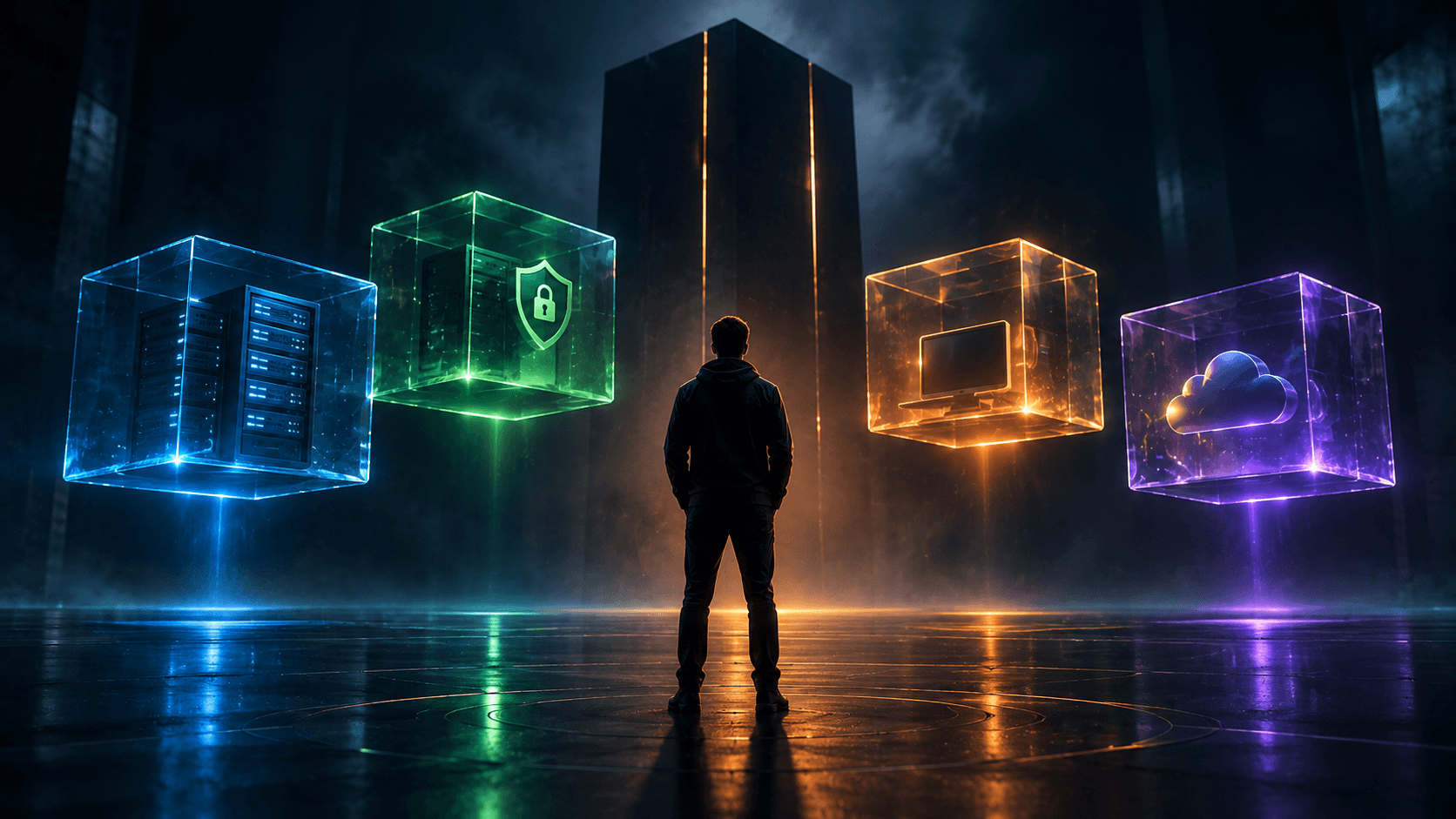
Security by isolation, not hardening. The core claim: if all software will eventually be compromised, then security comes from limiting what a compromise reaches, not from making compromise impossible. In Qubes, each security domain — work, personal, banking, untrusted — runs as a separate virtual machine with its own kernel, its own filesystem, its own userland. The PDF that eats your "untrusted" VM has no path to the files in your "banking" VM, because they are separate machines in everything but the physical chassis. Hardening still matters inside each VM, but it is no longer the only line of defense — it is one line among several.
The hypervisor as the boundary. Why virtual machines instead of containers or app sandboxes? Because those share the host kernel — and shared kernel is shared fate. A kernel exploit in a Flatpak sandbox escapes to the whole host; a kernel exploit in a Qubes VM escapes to that VM, where it meets the Xen hypervisor and a fresh, separate kernel surface. Qubes runs on Xen, the bare-metal hypervisor used by hosting providers to isolate hostile tenants from each other, and the design imports that threat model: treat every application as a hostile tenant. (The docs are blunt that installing Qubes inside a VM defeats the point — the boundary must be the real hypervisor on real hardware.)
Assume breach as a design input. This is the inversion at the center of the project. A monolithic OS asks "how do we stop malware?" and treats the existence of malware as failure. Qubes asks "given that this VM contains malware, what can it do?" and treats containment as the deliverable. That is why the architecture is full of things that look like paranoia until you see them as answers to shared fate: a dedicated network VM so that a compromised network stack never touches your files, a dedicated USB VM so a malicious keyboard never sees your keystrokes in other domains, disposable VMs that are created for one untrusted document and destroyed on close.
The lineage is honest. Rutkowska's published work on software isolation and the Qubes architecture goes back to 2009–2010; the project's first stable release (Qubes 1.0) landed in September 2012, and the core bet has not changed since. What has changed is the world around it: supply-chain attacks, sandbox escapes, and firmware implants went from conference talks to procurement questionnaires. The threat model Qubes was designed for stopped being theoretical, which is the quiet reason the project matters more in 2026 than it did in 2016.
How the Theory Becomes an Architecture
The interesting parts of Qubes are not features. They are consequences of the isolation thesis.
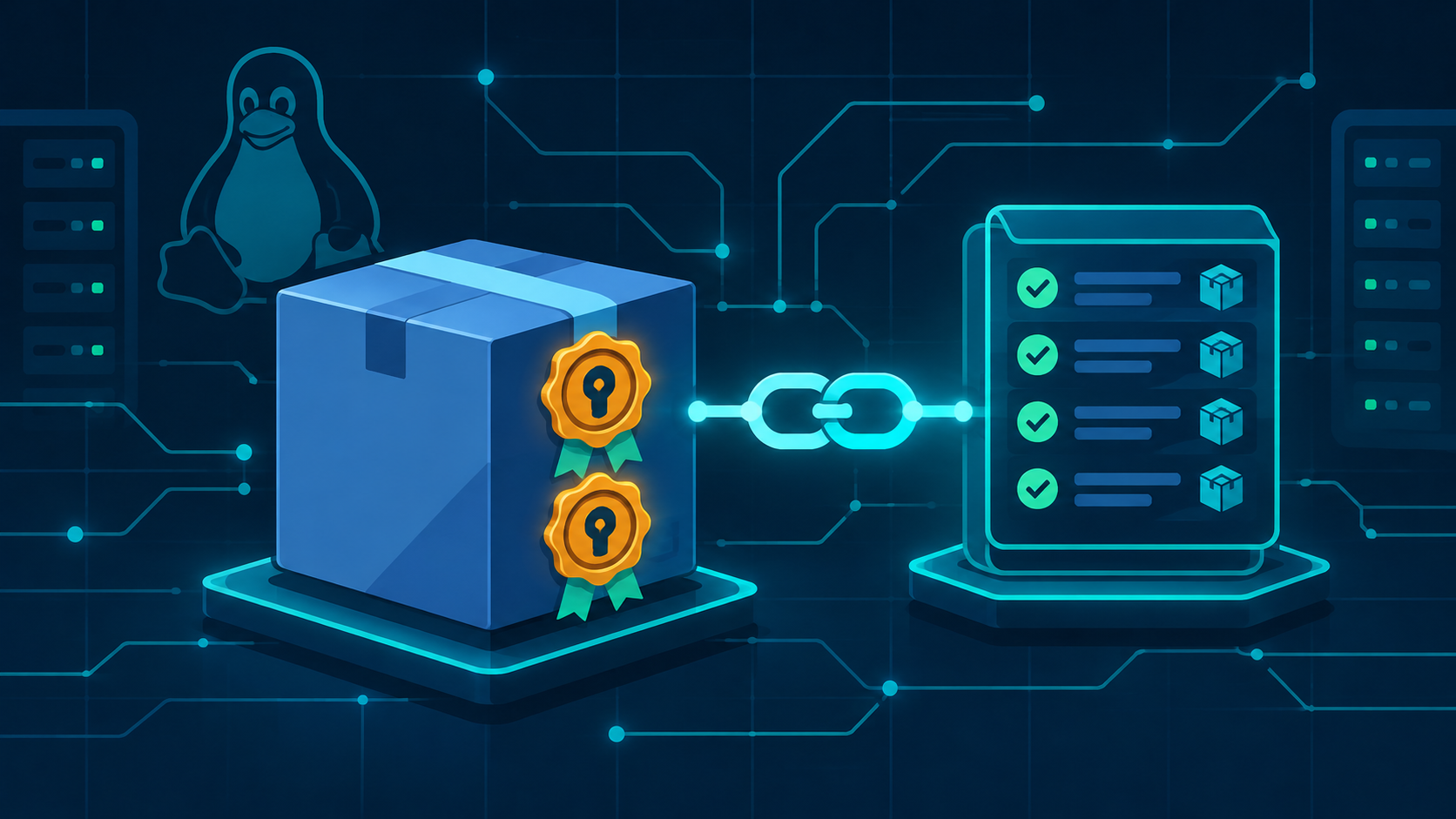
Domains, templates, and inheritance. Each application runs in an AppVM — a lightweight virtual machine that shares its root filesystem with a template (the current release defaults to Fedora 43 or Debian 13). You install software once in the template; every VM built from it sees the software; a compromise in one VM's user data never rides along to the next VM, because the template is read-only to them. This is the resolution of a tension that kills most compartmentalization schemes: real isolation normally costs real disk space and real setup time per compartment. Templates make a new compartment nearly free.
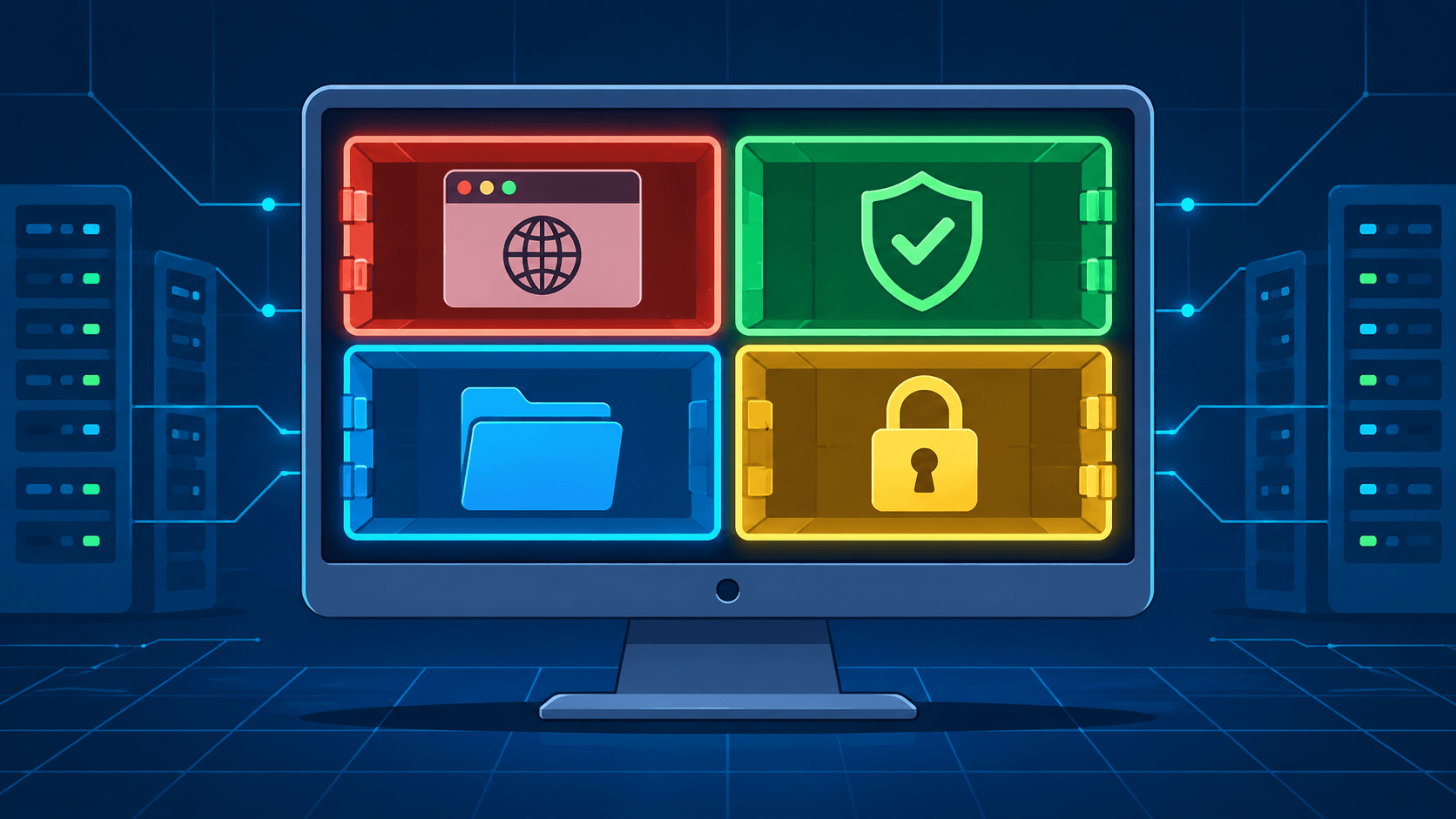
The GUI problem, solved centrally. Full VM isolation normally means either a window per VM on separate screens or a remote-desktop mess. Qubes virtualizes the GUI itself: every VM renders to a compositor in a privileged GUI domain, which draws all windows in one desktop, colors each VM's window borders (red for untrusted, green for banking, and so on), and mediates clipboard and file copy between domains with explicit user prompts. The desktop looks normal. The borders are the tell.
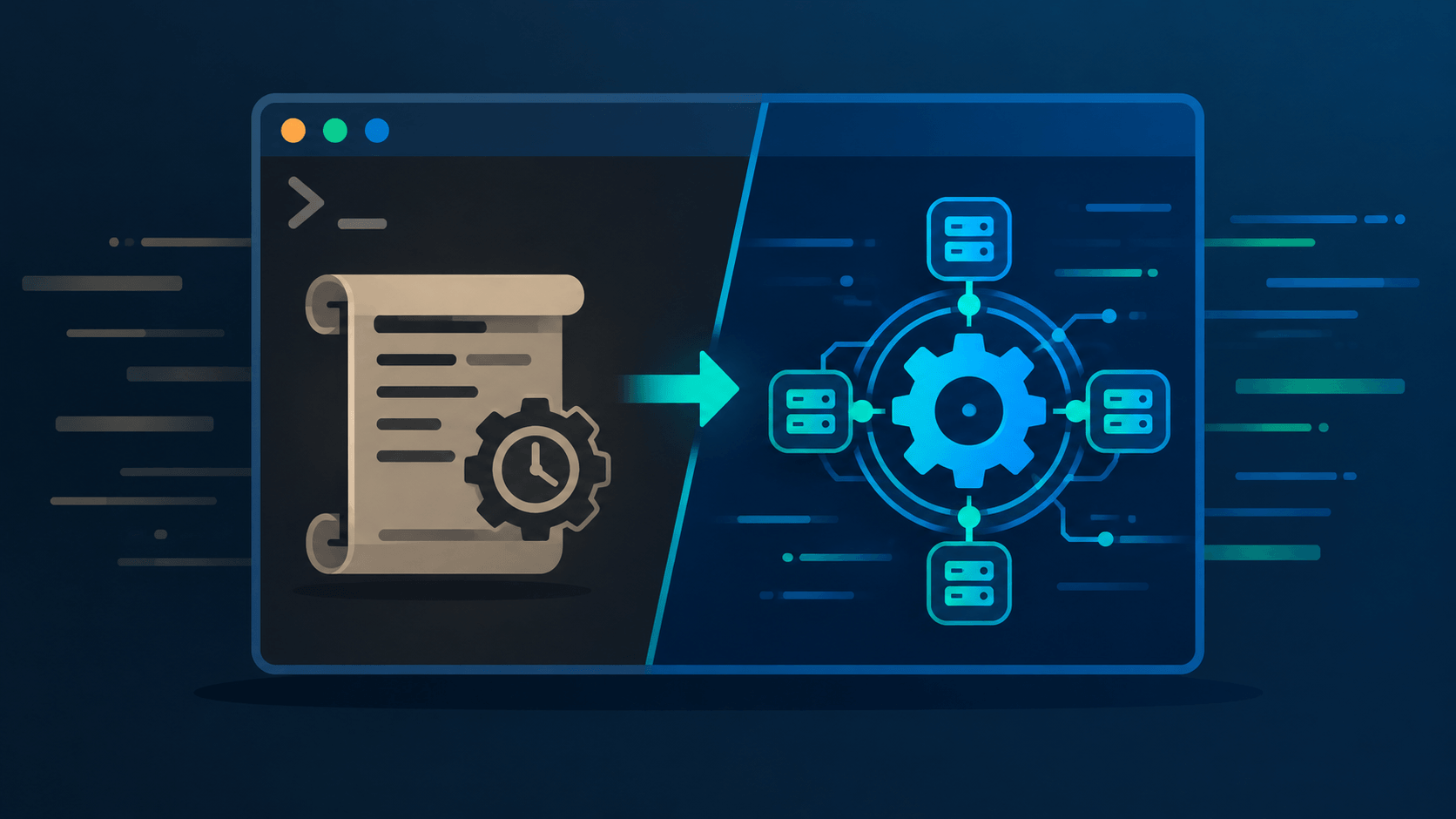
Policy, not vibes. Inter-VM communication runs through qrexec, a policy-controlled RPC mechanism. "May the work VM open links in the personal VM?" "May anything copy files into the vault VM?" is expressed as policy you can read and edit — in the current release via a graphical policy editor — rather than as an ambient property of the system. This is what turns a pile of VMs into a security model instead of a sandboxing hobby.
Small things that are actually load-bearing. Whonix templates (maintained by the Whonix Project, a Qubes partner) route a whole VM's traffic through Tor by construction. Anti Evil Maid ties the boot chain to the TPM so a bootkit cannot quietly replace the OS while pretending all is well. Disposable VMs exist precisely because the most common attack — "open this file" — deserves an answer that does not involve your real machine. And the project's security apparatus is unusually public: Qubes Security Bulletins (QSBs), Xen Security Advisories (XSAs), and signed releases are part of daily operations, not a press page — in the first week of November 2026 alone, the project published two QSBs (one for a Xen memory-isolation flaw, one for an APT package-verification bypass) and coordinated the Xen advisories behind them.
What Qubes does not save you from. The project says it plainly, and so should any article about it: the label is "a reasonably secure operating system," not a secure one. A compromised hypervisor or dom0 is game over. Firmware and hardware implants sit below the boundary entirely. Side channels leak across VMs by physics, not by permission. Evil-maid attacks need mitigations (full disk encryption, Anti Evil Maid), not architecture. And the security of the whole edifice depends on Xen, the dom0 security-critical components, and the build process — all real code, maintained by a small project.
The Takeaway
Qubes OS exists because the monolithic operating system is a shared-fate machine, and shared fate is a design choice, not a law of nature. Windows, macOS, and desktop Linux all invest in prevention — better sandboxes, better boot chains, faster patching — and all of them still treat the full-machine compromise as the unit of failure. Qubes changes the unit. One compromised application in one VM stays one compromised application in one VM, and the rest of your digital life — the other domains, the other identities, the other credentials — sits behind a boundary that is a hypervisor, not a permission checkbox.
That is the theory, and the theory wins. Whether it is the right bet for you is a separate question — one of threat model, of hardware, and above all of price. That is the subject of Part 2: how the four architectural bets compare side by side against desktop Linux, macOS, and Windows 11, and what the learning curve actually costs in weeks and in daily friction.
Further reading:
- Qubes OS — What is Qubes OS? — the project's own framing, endorsements included
- Qubes OS Architecture — domains, templates, and the security-critical core
- Qubes Air: Generalizing the Qubes Architecture — Rutkowska on where the isolation model goes next